Spanish News Today Editors Roundup Weekly Bulletin July 24
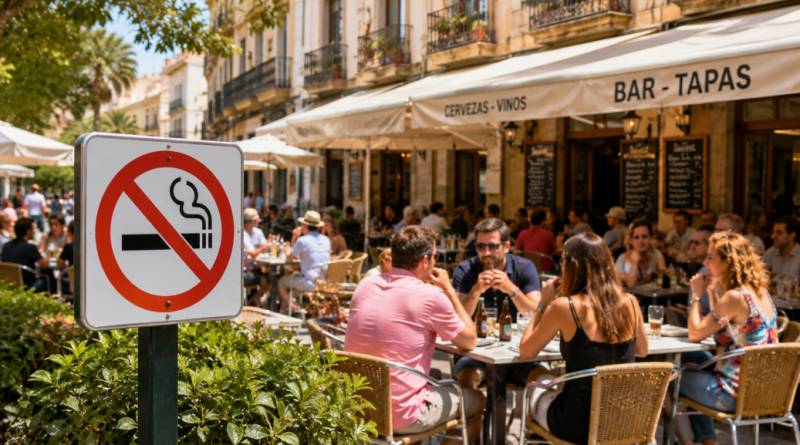
TOP STORIES: "Smoking ban approved on bar terraces, beaches and outdoor concerts in Spain" & "Ryanair flags major delays at Alicante, Malaga, Madrid and Tenerife airports this summer"
August is just around the corner, which usually means Spain starts easing off the accelerator a little. Not this year, apparently.
Instead, we've had a flurry of announcements covering everything from smoking and train travel to airports and summer holidays. Some will be welcomed, some have already sparked heated debate and one is likely to be very popular with dog owners.
So let's take a look at what's been making headlines this week.
No ifs, butts or maybes

There's nothing quite like sitting out on a terraza of a cafe in Spain with a strong café solo, views of the sea, watching the world go by. Perfect. But then someone at the next table lights up and the perfect moment drifts away along with the cigarette smoke.
Well, that could soon become a thing of the past. The Spanish government has approved plans for the biggest shake-up of smoking laws in more than 15 years.
The proposals still need to make their way through parliament, but if they're approved, smoking and vaping would no longer be allowed on bar and café terraces, beaches, around swimming pools, at bus stops and in children's play areas, among many other public spaces.
And it won't just be smokers who will notice the changes. Vapes, heated tobacco products, nicotine pouches and hookahs are all included too in the new legislation.
The government says the law needs updating because smoking habits have changed and more people, especially young people, are now using vapes and other nicotine products.
The plans would also make it illegal for under-18s to use them, tighten the rules on selling and advertising vapes, and create smoke-free zones around places like schools, parks and health centres.
For a lot of people, the changes can't come soon enough. If you've ever looked at social media, you'll know that smoking on Spain's café terraces is something visitors often comment on, especially those from countries where outdoor smoking bans have been in place for years.
But smoking is still very much part of everyday life here. It's not unusual to see people of all ages lighting up on terraces, outside bars or on the beach, so it's no surprise the plans have already sparked a backlash.
Bar and restaurant owners are worried the changes could put people off spending time on their terraces, especially smokers who might decide to stay at home instead. They also question whether the new rules will actually reduce smoking or just change where people light up.
For now though, nothing has changed. The bill still has to make its way through parliament, so smoking and vaping remain allowed on bar terraces while the debate continues.
Up, up and delay
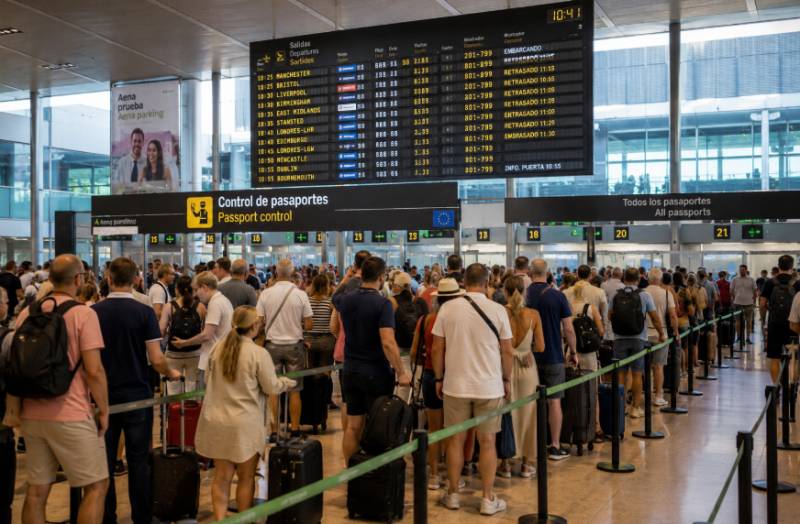
Summer holiday season is in full swing and for anyone flying between the UK and Spain over the next few weeks, patience may need to be packed alongside the suncream.
According to the airline, the delays are linked to the EU's Entry-Exit System, which was fully rolled out earlier this year and requires non-EU travellers entering the Schengen Area to provide biometric information such as fingerprints and facial scans.
While airports have introduced measures to keep queues moving, including greater flexibility for staff and alternative passport control arrangements for some passengers, Ryanair insists the system is still creating bottlenecks during busy periods.
The airline is now backing calls for temporary flexibility measures to remain in place beyond September, arguing that airports need more time to improve infrastructure, resolve technical issues and recruit additional staff.
For travellers, the advice coming from the budget airline we all love to hate is arrive early and be prepared for longer waits than you might have been used to before the new checks came into force.
The warning comes at an interesting time for Ryanair itself.
Rising tensions in the Middle East have pushed up the cost of aviation fuel, increasing operating expenses across the industry. Even so, Ryanair says there are no immediate plans to pass those costs on to customers.
In fact, average fares actually fell during the quarter, helping the airline attract more than 61 million passengers. Aircraft were also flying exceptionally full, with seats occupied 94% of the time on average.
The airline remains confident about the year ahead and expects passenger numbers to continue growing, although it has stopped short of making any profit forecasts because of uncertainty surrounding fuel prices, ongoing conflicts and wider economic pressures.
If Ryanair needed any proof that demand remains strong, it only has to look at the latest figures from Spain's tourism sector.
That takes the total number of overseas arrivals during the first six months of 2026 to an impressive 54.6 million.
Once again, British travellers led the way.
Almost 2.6 million passengers arrived from the UK during June alone, accounting for nearly one in every four international visitors flying into Spain. The Valencian Community was among the strongest performers, recording double-digit growth as more holidaymakers, second-home owners and expats continued to choose Spain for their summer plans.
The figures suggest that while travellers may grumble about queues, delays and rising costs, their appetite for Spain remains as strong as ever.
The only real question is whether they'll spend more time on the beach this summer or standing in line waiting for a passport stamp.
Tails on the rails
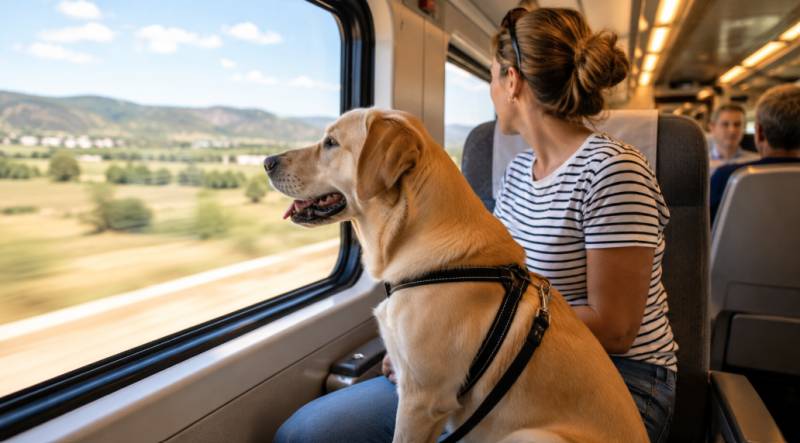
If your dog has always been the reason you end up driving rather than taking the train, or simply had to be left at home altogether, Renfe may just have changed the equation.
The change covers AVE, Avlo, Alvia, Intercity, Euromed, Avant and Media Distancia services.
Renfe first dipped its toe into large dog travel back in September 2022, starting with a handful of routes out of Madrid, but the scheme was limited, boarding was only possible at the train's starting station, and spaces were hard to come by.
The new system is a proper expansion. Owners can now board at intermediate stops along a route, each service has a dedicated pet-friendly carriage, and there is space for up to two dogs per train.
Seating works like this: when you book, two adjacent seats are automatically assigned. You take the aisle seat and your dog gets the one by the window. Whether, or not, they will appreciate the view is entirely their business.
Passengers on AVE, Alvia, Avlo, Euromed, Intercity and Avant services will receive a complimentary travel pack at the station, including a seat cover and pet mat, with owners responsible for fitting and removing them during the journey.
Renfe has been running the scheme in partnership with pet food company Purina since 2022, which supplies the mats and covers and advises on animal welfare. A reminder email with travel conditions will also land in your inbox 24 hours before departure.
A few conditions apply. Dogs must be on a lead no longer than 1.5 metres and will need a muzzle in stations and during boarding. Proof of vaccinations or a valid European pet passport is required, and owners need to bring a cleaning kit. Dogs under one year old and potentially dangerous breeds are not permitted.
The cost is €40 per journey on high-speed and long-distance services, with standard fares on Avant and Media Distancia routes. Only two spaces are available per train, so if you are planning a trip, book early. Those spots will undoubtedly go fast.
Murcia
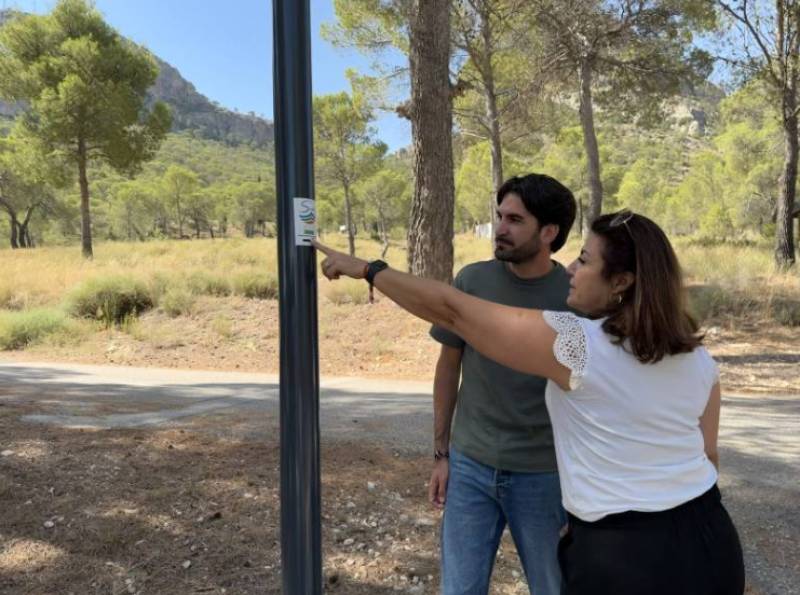
Now over to the Region of Murcia, where the Botanic Trail of Santa Ana in the northern municipality of Jumilla has been recognised as a Blue Trail. This brings the Region of Murcia's total to a whopping 32 of the 194 routes recognised across Spain.
Blue Trails recognise routes that help protect natural areas and encourage people to enjoy them, just like the Blue Flag awards for beaches.
The Santa Ana Botanic Trail, which is the first Blue Trail in Jumilla, takes hikers through pine forests to the Franciscan Monastery of Santa Ana, with views across Jumilla and the surrounding countryside.
The route is also home to the Iberian archaeological site of Coimbra del Barranco Ancho, and if you're lucky you might spot golden eagles, peregrine falcons or red-billed choughs along the way.
If you're planning to head out to one of Murcia's Blue Trails over the next few days, just double-check the access before you finalise your plans, as some forest trails and public woodland areas have been closed because of the extreme wildfire risk.
The Region of Murcia has brought in a series of emergency measures to deal with the intense heat, with temporary restrictions now in place until 7:00am on Sunday to help reduce the risk of fires.
Vehicles and machinery are banned from forest tracks, while equipment that could create sparks, including welders and angle grinders, can't be used in or near woodland. Thursday was the hottest and highest-risk day, with even tighter restrictions in place.
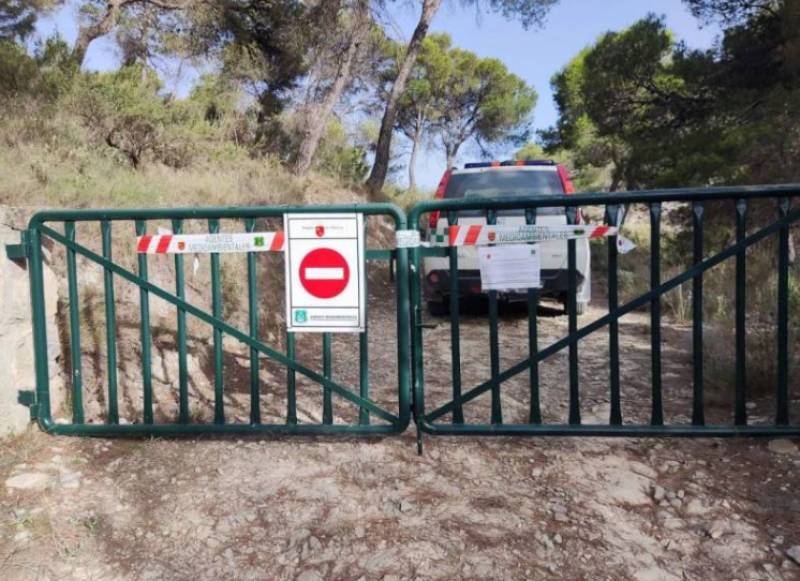 Barbecues and fireworks are also banned near forests, some woodland areas will be closed, and extra patrols and firefighting crews will be on standby. If you spot smoke or a fire, call 112 straight away.
Over on the coast, growing piles of washed-up seagrass are causing complaints, with new rules leaving councils and the regional government scratching their heads over what happens next.
The rules were introduced to protect the Posidonia, which plays an important role in preventing coastal erosion. The only problem is it's still not clear who should be moving the seagrass, when it can be moved, or exactly where it should go once it's been cleared.
The result is that it has been piling up on some beaches just as the summer season gets into full swing. The regional government wants the rules changed, saying the build-up is creating safety and access problems, and in some places residents have started moving the seagrass themselves while they wait for the government to decide how to proceed.
And finally, a mystery package that washed up on a packed beach in La Manga had everyone talking this week. It had all the hallmarks of a significant find. On Saturday, a large package washed up on a busy beach in La Manga del Mar Menor. Witnesses described it as suspicious.
Word spread quickly among the locals and tourists enjoying a day at the beach. Policía Local officers arrived and secured the area. Lifeguards came roaring across the sand on a quad bike to remove it, all in full view of hundreds of people who carried on swimming and sitting under their umbrellas while speculating and whispering about what might have been inside. The consensus among onlookers? Drugs.
It wasn't an unreasonable assumption. Waterproof packages containing cocaine or hashish have been found on regional beaches before, having fallen from the speedboats used by drug traffickers and subsequently drifted ashore or been spotted floating near the coast.
Just this week, a suspicious vessel was filmed pulling up to a beach in Cartagena to refuel, with those loading jerrycans onto the boat covering their faces to avoid being identified. So when something large and unidentified washes up on a beach packed with summer visitors, it's not surprising that people jump to conclusions.
In cases like these, it's laboratory analysis that usually confirms what investigators already suspect, and jurisdiction falls to the Guardia Civil.
The Guardia Civil was prepped and ready. The lab was waiting. The bathers were watching.
But in the end it was just an innocent bale of straw. Completely, gloriously, and anticlimactically a bale of straw.
It turns out bales of straw washing up in the Mediterranean are not as unusual as it sounds. They typically fall from livestock transport vessels, drift with the current and eventually make landfall on the nearest beach. They're an environmental nuisance and a maritime safety hazard, and they need to be removed when they appear.
Which the lifeguards duly did, on their quad bike, while the bathers went back to their ice creams.
To see any events coming up soon in the Murcia area, have a look at our EVENTS DIARY:
Spain

Spain's politicians are clearly keen to get a few things off their desks before the traditional August slowdown kicks in.
No sooner had the government unveiled plans to extend smoking restrictions to more public spaces than ministers approved another reform that could change the way many people access healthcare.
The government argues that allowing nurses and physios to prescribe appropriate medications could reduce unnecessary appointments and help patients access treatment more quickly. Detailed protocols would still be required and the reform must pass through parliament before becoming law, but supporters believe it would make the healthcare system more efficient.
The plans also include measures aimed at helping vulnerable patients. In some circumstances, people with mobility issues, disabilities or health conditions could have medicines delivered directly to their homes rather than having to visit a pharmacy in person.
For many residents, the proposals are a reminder that not every useful change arrives with great fanfare. Sometimes the most practical reforms are the ones that quietly remove a bit of hassle from everyday life.
The same could be said for a little-known scheme that thousands of workers in Spain may be entitled to use but have never heard of.
Known as the Individual Training Permit, or PIF, the programme allows eligible employees to take paid time off work to attend approved training courses leading to recognised qualifications.
The scheme isn't limited to Spanish nationals. Foreign residents working legally in Spain can also qualify, provided they meet the requirements and their employer participates in the system.
There are some important conditions. The training must lead to an officially recognised qualification, classes generally have to take place face-to-face and employers can refuse requests if there are legitimate operational reasons for doing so.
Even so, it's one of those benefits that many employees only discover by accident. For anyone thinking about improving their qualifications, learning a language or pursuing a new career path, it may be worth investigating before the summer ends.
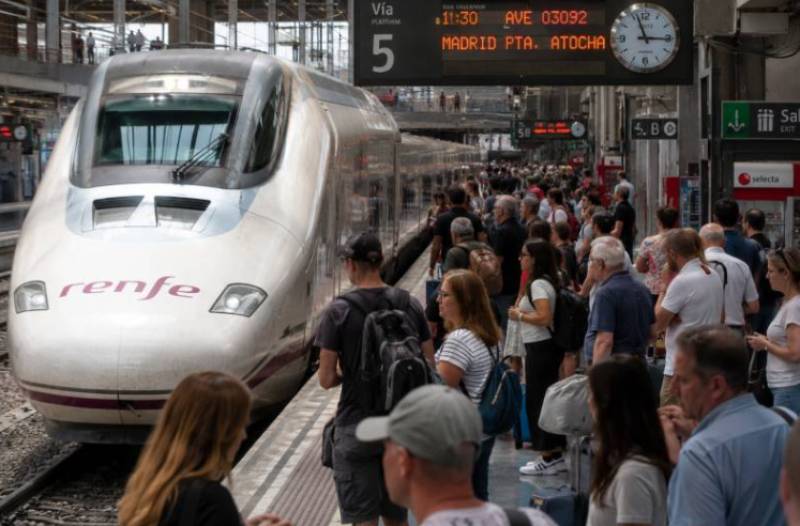
Speaking of work, train staff are preparing to do the exact opposite at the end of this month.
This time, the dispute centres on concerns about air conditioning systems aboard some trains. The Sindicato Ferroviario union claims staff are being forced to work in increasingly uncomfortable conditions during one of Spain's hottest summers in recent memory, pointing to reports of headaches, fatigue and other heat-related problems.
The union argues that some faults are being patched up rather than properly resolved and has called for more action to address recurring issues.
At the time of writing, the Ministry of Transport has not confirmed minimum service levels, meaning it's still unclear exactly how many trains could be affected. Previous strikes have seen the majority of services continue operating, albeit with reduced timetables.
Anyone planning to travel at the start of August should keep an eye on updates from Renfe over the coming days and check their service before heading to the station.
After all, with airports warning about passport queues and trains facing potential disruption, getting away this summer might require just a little more planning than usual.
Alicante
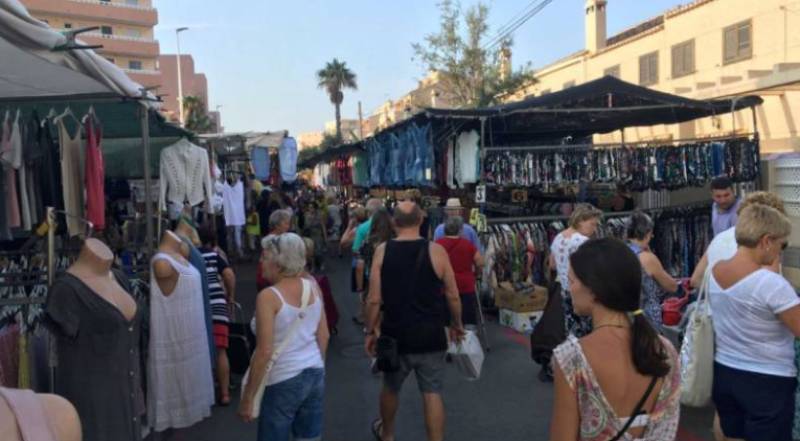
Anyone who relies on Torrevieja's Friday market for their weekly fruit and veg shop, a bargain hunt or simply an excuse to get out of the house will need to make a note of a couple of date changes.
Rather than cancelling the markets altogether, Torrevieja Town Hall has shifted them to Monday August 10 and Monday August 17 respectively. That means shoppers will actually get two market days in each of those weeks, with the rescheduled Monday markets followed by the regular Friday markets just a few days later.
For many residents, it'll be a small inconvenience in exchange for one of the town's biggest events of the year. Low Festival attracts thousands of music fans every summer and transforms the area around Antonio Soria Park into a hive of activity for three days.
A little further up the coast, emergency services were dealing with a very different kind of disruption over the weekend.
Eight vehicles were destroyed in
a series of deliberate fires in Guardamar del Segura during the early hours of Sunday July 19. Firefighters were called out shortly after 11pm and remained at the scene until around 4am as crews tackled blazes at several locations across the town.
According to the Alicante Provincial Fire Consortium, the fires appear to have been started by the same person, who allegedly moved from street to street setting light to parked vehicles. Firefighters from Almoradí, Orihuela and Torrevieja were all involved in bringing the incidents under control.
Thankfully, nobody was injured and the damage was limited to the vehicles involved. The Guardia Civil has now launched an investigation to identify whoever was responsible.
The animals were discovered by SEPRONA officers during a routine visit to a local agricultural property. Hidden among trees and vegetation, the pen contained seven adult sheep, thirteen goats and nine young kids.
The owner told officers the animals were being kept for personal use, but was unable to provide documentation showing where they had come from or confirming their health status. A government veterinarian was subsequently called in and ordered that the animals remain on the property until the relevant authorities decide how the case should proceed.
Officials say the lack of identification and veterinary controls makes it impossible to trace the animals' origins or verify their health, raising concerns not only for animal welfare but also for food safety.
The investigation is now in the hands of Alicante's agricultural authorities, who will determine whether any sanctions are appropriate. Under regional livestock regulations, serious breaches can carry fines running into tens of thousands of euros, while the most severe offences can result in penalties exceeding €1 million.
Andalucía
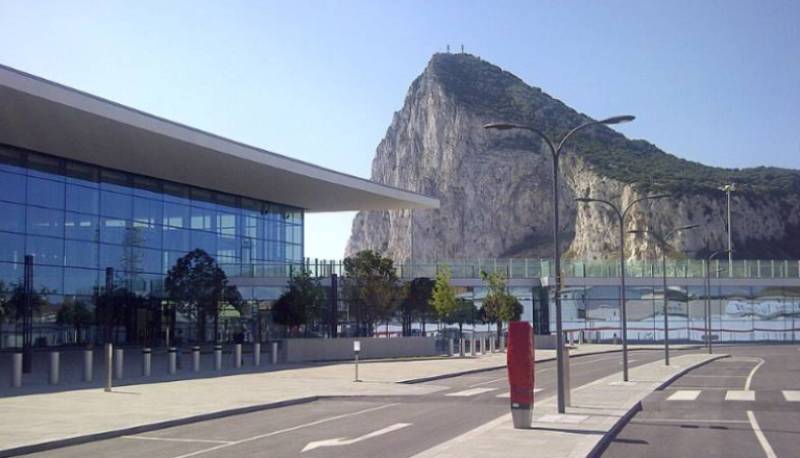
Following last week's historic signing of the EU-UK Treaty on Gibraltar and the coming down of the border fence, attention quickly turned to how the new arrangements were actually working in practice. The answer, according to Gibraltar's government, is rather better than some social media posts were suggesting.
The longest wait recorded on Friday was around 50 minutes for British citizens and other non-EU travellers, though passengers on Saturday's first arriving flight cleared security in under 20 minutes. Six more kiosks are being added next Thursday to bring waiting times down further.
Gibraltar residents are exempt from the new Entry/Exit System, though they'll need a valid identity document to confirm their status.
In the meantime, water is being distributed to those waiting in line, seating is available for anyone who needs it, and tourist information staff are on hand to help.
The government's tone has been measured throughout, thanking residents for their patience during what it called an "adaptation phase." Teething troubles were always going to happen with a change of this scale. The important thing is that the system is up and running.
Moving along the coast to Málaga and there is plenty of good news on the port front, though it comes with an interesting caveat. For the third consecutive year,
Málaga's port is the fastest growing in the Spanish system, expanding at around 12 to 13% in 2026 across containers, exports, vehicle imports and bulk cargo.
Port president Carlos Rubio described it as "a diversification that strengthens Málaga's strategic position within international routes." Global disruption has played its part too. Rerouting caused by tensions in the Red Sea and the Strait of Hormuz has led some companies to eye Málaga as a redistribution hub for Mediterranean-bound goods, and Rubio's view is that the port "has managed to turn some of these difficulties into an opportunity."
The challenge now is space, and there is not much of it left. A tender for the development of Pier 8 is expected shortly, adding between 80,000 and 90,000 square metres of operational space, which Rubio describes as "the last major physical expansion possible within the port." After that, the strategy looks outward, with agreements in place to use the Los Prados rail platform as a logistics area and longer-term potential from the Antequera Dry Port.
On the other side of the city, residents hoping to see Pedregalejo's promenade finished this summer will have to wait a little longer. An additional €857,141 has been added to the original €5.7 million budget, pushing completion to the end of 2026. The extra investment covers drainage improvements, a new wastewater pumping station, updated lighting and standardised kiosks for the seafront establishments.
The cause appears to have been a tripped circuit breaker that knocked out the pump responsible for injecting chlorine and maintaining correct pH levels, allowing harmful gases to build up in the water. All those transferred to hospital were subsequently discharged and none required hospitalisation.
Guests who arrived the following Monday were told the pool was closed for maintenance, a detail that did not go down especially well. "Maintenance is usually done in winter, not in summer, in the middle of peak tourist season," one guest pointed out, which is hard to argue with.
The hotel declined to comment and the hospital declined to provide information. Some of those affected are understood to be considering a formal complaint.
We end on something altogether more cheerful, and frankly one of the better stories we have come across in a while. In Gilena, a town of fewer than 4,000 people tucked into the Sierra Sur mountains of Seville,
a team of volunteers has built a full-scale replica of the Trojan Horse. Six metres tall, constructed from wood on an iron frame, weighing over a ton and large enough to fit 14 people inside.
The same team built a replica Etruscan ship last year for their annual Castra Legionis history event. This year's theme is Homer and The Odyssey, so the choice of centrepiece was fairly obvious.
The tricky part, as archaeologist Manuel Jesús Díaz explains, is that nobody actually knows what the horse looked like. "In Homer's work, the Horse is only mentioned in passing," he says, "and in fact the original text in which the fall of Troy is narrated has been lost." The team worked from ancient bronze horse figurines and the geometric Greek style of around the 8th century BC, filling in the gaps with educated imagination.
Capacity tests confirmed it holds around 14 people, close to what historians believe the original accommodated. Whether it would be comfortable is another matter entirely. As Díaz puts it with a smile:
"It wouldn't be very comfortable to spend a night there waiting for the Trojans to fall asleep." Visitors to the September events will be able to judge for themselves.

That’s all for this week. Thank you for reading and we’ll see you again for more next Friday.
’Til then!









 Spanish News Today
 Alicante Today
 Andalucia Today
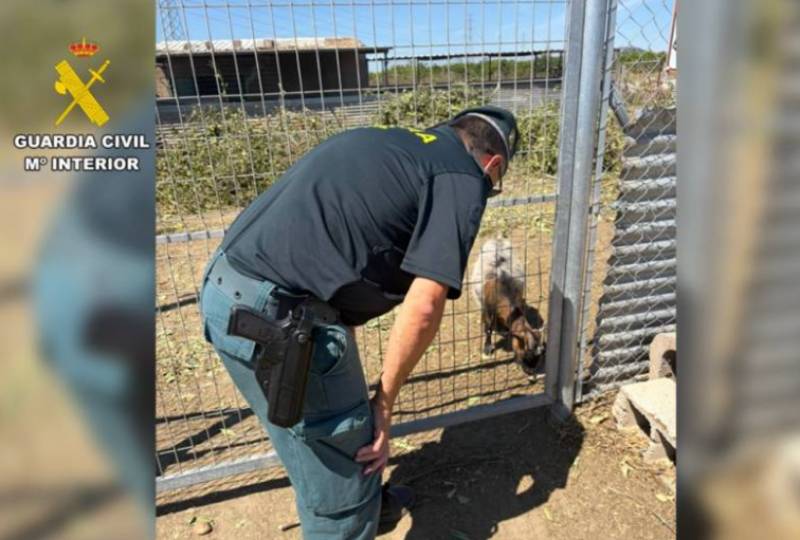 An inspection in San Miguel de Salinas led officers to a hidden enclosure containing 29 sheep and goats that had no identification tags, paperwork or veterinary records.