Spanish News Today Editors Roundup Weekly Bulletin July 31
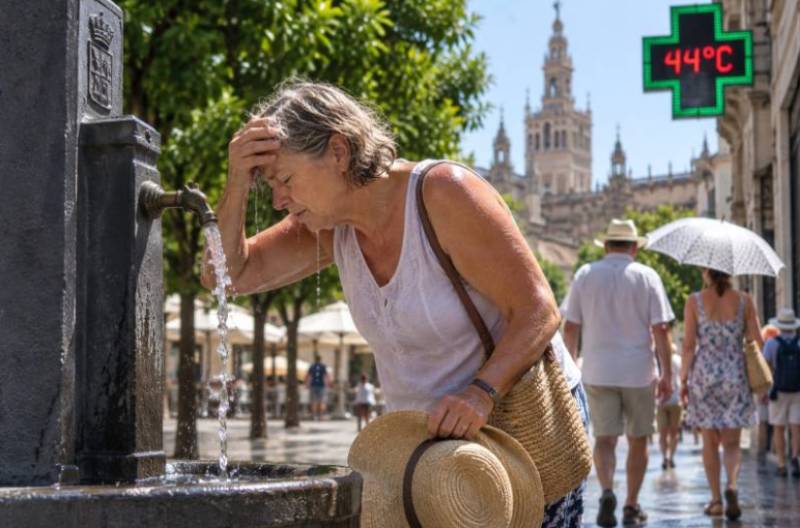
TOP STORIES: "Region of Murcia wakes to smoke as Spanish wildfires continue to burn" & "Scorching start, stormy finish? August could bring a dramatic weather change in Spain"
Welcome to this week's news round-up.
Another week, another heatwave. Spain is now battling its fourth official scorcher of the summer, so it's hardly shocking that wildfires are once again making the headlines. Thankfully, it's not all doom and gloom this week. From airport drama and courtroom twists to a few reasons to be cautiously optimistic, there's plenty to catch up on.
Top up that cold drink, crank up the fan and let's get stuck into the week's biggest stories.
Here we go again...
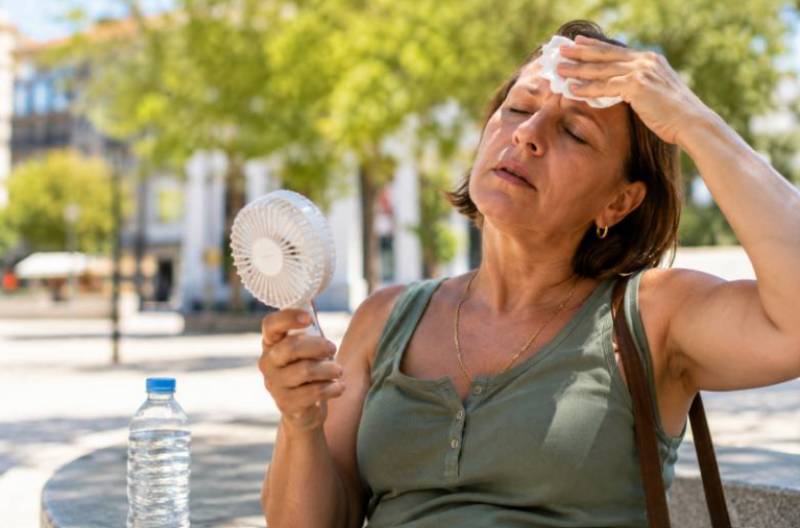
The weather forecast has become a bit like Groundhog Day lately. Sun. Sun. More sun. Then another heatwave just in case anyone was getting too comfortable.
This weekend brings official
heatwave number four of the summer, and it's arriving with exactly what you'd expect. Plenty of sunshine, very little cloud and temperatures that'll have most of us plotting the shortest possible route between the air conditioning, the swimming pool and the fridge.
The latest blast of hot air is expected to stick around into next week, bringing more tropical nights and another spell of sleeping with one leg outside the duvet in the hope it'll somehow make a difference.
Before you start Googling "houses for sale in Iceland", there is at least a flicker of hope. Some of Europe's leading long-range weather models are beginning to suggest
the second half of August could bring a real change in the pattern that's kept Spain sizzling for weeks.
At the moment, a stubborn area of high pressure has been acting like an oversized lid on the atmosphere, keeping the skies clear and allowing hot air to build day after day. According to the latest projections, that lid may finally begin to shift as the month goes on, opening the door to cooler Atlantic air pushing across the peninsula.
That doesn't necessarily mean you should rush out and buy an umbrella just yet. Long-range forecasts are notorious for changing their minds and nobody can say exactly where any rain will fall this far ahead. One day's forecast can easily look very different a week later, never mind one looking several weeks into the future.
What forecasters are seeing, though, is a growing chance that the weather could become much more unsettled during the second half of August. Instead of endless sunshine and cloudless skies, we could start to see showers, thunderstorms and dramatic afternoon downpours that cool everything down, at least for a little while.
Of course, storms in August aren't always a blessing. After weeks of intense heat, heavy rain can arrive suddenly, bringing flash flooding, strong winds and plenty of spectacular lightning. Even so, after spending much of the summer feeling like someone has left Spain in a fan-assisted oven, many people will probably be more than happy to swap relentless sunshine for a few dark clouds.
For now, though, it's business as usual. Keep the water bottle topped up, stick to the shade during the hottest part of the day and make the most of any air conditioning you can find. The thunderstorms might be on the horizon, but first there's another heatwave to get through.
The fire fight
It's been another incredibly difficult week for firefighters across Spain, with what has become one of the country's most serious wildfire emergencies in recent years.
The biggest concern has been in the Community of Madrid and neighbouring Ávila province, where several fast-moving fires forced the Government to declare a national emergency and take control of the response.
Tens of thousands of people were evacuated from their homes as flames spread rapidly through forests and rural communities, while thousands more were told to stay indoors.
Emergency services from across Spain have been working around the clock, with hundreds of firefighters, military emergency crews, forest brigades and police all involved in trying to contain the blazes. Prime Minister Pedro Sánchez described the situation as "dramatic", saying every available resource had been deployed to tackle the crisis.
One of the most alarming fires was near Burgohondo in Ávila, where flames spread at extraordinary speed before reaching the Valle de Iruelas Nature Reserve, home to one of Spain's most important colonies of black vultures. Parts of the protected area have been destroyed, highlighting not only the danger to people but also the devastating impact on wildlife and natural habitats.
The biggest worry now is the weather.
Although the intense heatwave that helped fuel many of the fires eased briefly, another spell of very hot, dry weather has already arrived. Strong winds, low humidity and rising temperatures create exactly the conditions firefighters dread, making it much easier for fires to spread quickly or reignite even after they appear to be under control.
The scale of the fires has also been staggering. The Burgohondo blaze has already burned more than 50,000 hectares, making it the largest wildfire ever recorded in Spain. Combined with the major fires affecting Madrid and Toledo, almost 77,000 hectares have been destroyed. Thousands of people have been displaced, roads have been closed across several regions and Europe has even stepped in to help, with Greece sending firefighting aircraft after Spain requested assistance through the EU Civil Protection Mechanism.
Even those living hundreds of kilometres away have felt the effects.
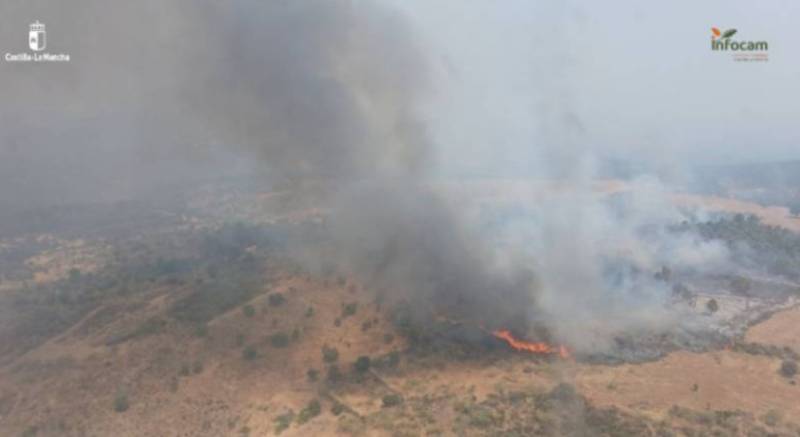
Earlier this week, many
people across the Region of Murcia woke up to the smell of smoke and hazy skies, despite there being no active wildfires in the Region. The smoke had travelled south on changing winds from the large fires burning in central Spain and Castellón. Authorities reassured residents there was no local danger but advised older people, young children and anyone with respiratory conditions to stay indoors where possible until the air cleared.
Murcia itself also had its own scare after the wildfire at La Pinilla in Fuente Álamo burned around 228 hectares before being brought under control. Although the fire has now been stabilised, emergency services remained at the scene monitoring the area in case of flare-ups.
Sadly, these fires show that Spain's wildfire season is becoming longer, more intense and increasingly unpredictable. Firefighters often say the battle doesn't end once the flames are knocked back. Hotspots can smoulder underground for days, changing winds can quickly reignite them, and another heatwave is never far away.
With August still to come, emergency services are asking everyone to remain vigilant, avoid any activities that could spark a fire and keep up to date with official warnings if you're travelling through affected areas. The worst may not be over just yet.
Only at Corvera...

Corvera Airport just can’t seem to stay out of the headlines at the moment and sadly, it’s usually for all the wrong reasons.
Just when you think Murcia International has finally shaken off its reputation for drama, something else comes along to remind us of its colourful history.
The money relates to investments made before the original contract to build and operate Corvera Airport collapsed. What was supposed to be Murcia's shiny new airport turned into years of delays, legal battles and political headaches before it eventually opened under Aena's management in 2019.
Regional officials aren't accepting defeat just yet. They've already appealed the latest ruling, insisting the legal process is still far from over in the hope of avoiding the payment altogether.
The figure might sound eye-watering, but the final cost is expected to be considerably lower. That's because the regional government is also the airport company's biggest creditor after previously guaranteeing a €180 million loan to keep the project alive. As the bankruptcy process continues, much of the compensation is expected to make its way back into government coffers.
So, more than 12 years after Corvera was originally supposed to open, the airport's longest journey is still the one through the courts.
That wasn't the only drama unfolding at Murcia International this week.
The first attempt came to an abrupt halt during a routine baggage inspection carried out as part of ‘Operation Safe Summer’. Officers became suspicious of a suitcase that had already been checked into the aircraft hold and allegedly discovered around 4kg of vacuum-packed marijuana buds along with more than 10kg of hashish pellets hidden inside.
According to investigators, the passenger realised officers were taking a close interest in his luggage and decided it was time for a swift exit, leaving the airport before he could be questioned.
Unfortunately for him, that wasn't the end of the story.
After identifying the suspect and issuing an arrest warrant, officers kept watch at the airport. They say the man later returned armed with a new last-minute ticket to Manchester, this time bought by someone else, and wearing a hat in what appears to have been an optimistic attempt at avoiding recognition.
It didn't work.
Officers recognised him as he passed through security and arrested him before he had the chance to board the flight, bringing an end to a getaway that never really got off the ground.
Murcia

Now let's see what's been happening in the Region of Murcia. If you've been keeping an eye on the property market, you'll know buying a home isn't getting any easier. But it's not just prices that are changing.
New-build homes across the Region of Murcia are getting noticeably smaller, with the average apartment now around 25 square metres smaller than it was a decade ago. According to the Official College of Architects, the average size has fallen from 172 square metres in 2015 to just 147 square metres in 2025. Despite that, prices continue to climb, meaning buyers are often paying just as much, or even more, for considerably less space.
So why is it happening?
Developers point to a combination of rising construction costs, more expensive land and changing lifestyles. More people are living alone or as couples without children, so demand for one- and two-bedroom homes has increased. At the same time, larger family homes are becoming unaffordable for many buyers.
The result is that smaller homes are becoming the new normal across Murcia, particularly around the university areas and growing neighbourhoods such as Guadalupe, Churra and La Nueva Flota. Many new developments now include shared pools, gyms and rooftop solariums to compensate for the lack of private space. And while the overall purchase price might look lower, some of these apartments are selling for more than €3,500 per square metre, well above Murcia's average. For many first-time buyers, it's becoming less about buying the home they want and more about buying the one they can afford.
Talking of pools, one of this summer's more unusual trends has really taken off across the Region, with homeowners renting out their swimming pools by the hour.
As the heat continues, platforms that connect pool owners with people looking for somewhere private to cool off have seen bookings go through the roof. Around 60 homeowners in the Region of Murcia are now offering their gardens and pools for day use, giving families and groups of friends an alternative to crowded beaches and public swimming pools.
One homeowner from Sangonera la Seca says it's become a surprisingly profitable side hustle, earning €400 to €500 on busy days. Guests collect a key from a secure lockbox, spend the day by the pool and leave in the evening, with a refundable deposit helping to protect owners against damage.
It's not quite as effortless as it sounds, though. Another host decided to stop after finding the cleaning and preparation too difficult to juggle around work. Even so, with another hot August ahead, private pool rentals don't look like a trend that's disappearing anytime soon.
 And now, some good news if you're a fan of La Mar de Músicas, Cartagena has already revealed the guest country for the 2027 edition of La Mar de Músicas, and it's one that will undoubtedly put a smile on plenty of Irish faces.
Ireland will take centre stage at the internationally renowned festival, with a programme celebrating not only music but also literature, cinema and the visual arts. The announcement came during the closing concert of this year's festival, when the audience was treated to a surprise performance from traditional Irish pipers before organisers officially revealed the 2027 theme.
Organisers say Ireland was chosen because it has a musical heritage recognised all over the world, giving the world iconic artists like U2, The Cranberries and Sinéad O'Connor. But the music scene has changed dramatically over the past decade. Alongside folk, artists are experimenting with everything from hip hop and electronic music to jazz and post-punk, while performers like Belfast rap trio Kneecap have even helped bring the Irish language to a new generation of listeners. As always, La Mar de Músicas will go well beyond concerts, with exhibitions, films and literary events helping to bring Irish culture to Cartagena next summer.
Meanwhile, if you've been swimming in the Mar Menor this, you may have noticed something missing.
Jellyfish numbers are much lower than usual this summer and, despite the anti-jellyfish nets being back at several popular beaches, scientists say they're not the main reason.
Researchers at the University of Murcia believe unusual temperature patterns have disrupted the jellyfish life cycle, delaying their development and resulting in far fewer adults appearing this year. Species such as the familiar fried egg and barrel jellyfish have been scarce, and so far there haven't been any of the large blooms visitors sometimes associate with the lagoon.
While that's likely to be welcome news for swimmers, researchers say it's not entirely positive. Jellyfish play an important role in filtering the water naturally, and their absence comes at a time when nutrient levels entering the Mar Menor are significantly higher than usual. For now, water quality remains fairly stable, but scientists will continue monitoring oxygen levels and conditions as water temperatures continue climbing through the summer.
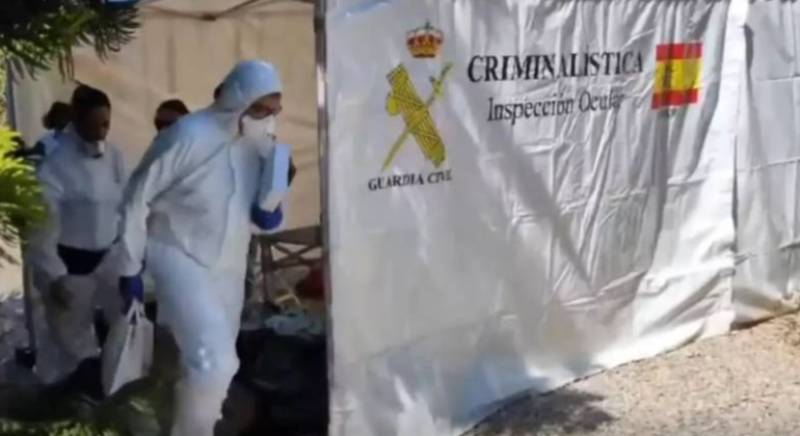 Finally, there has been another major development in the double murder investigation at Camposol.
Police have launched an international manhunt for a Colombian national they believe left Spain shortly after the killings, while a key witness has also failed to appear before the investigating judge despite being summoned to give evidence.
The case centres on the deaths of two Ecuadorian men whose dismembered bodies were discovered buried beneath earth and concrete in the basement of a villa on the Camposol urbanisation. Detectives believe the man now being sought internationally may have been at the property on the night of the murders, while investigators continue trying to establish the role of everyone linked to the case.
If you're looking for something to do over the next few days, there are a couple of great events worth adding to your diary.
The best part is that each chapter stands on its own, so even if you missed the first one, you can jump straight in and enjoy the experience.
The parade gets under way at 9.30pm, making its way from the Club Náutico along the Bay of Levante to the iconic Ícaro statue.
To see any events coming up soon in the Murcia area, have a look at our EVENTS DIARY:
Spain
Many of those who lost their lives are believed to have drowned trying to swim around the Tarajal breakwater, a stretch of coastline that has claimed many lives before. Search teams are still recovering bodies and with several people reported missing, there's growing concern the final death toll could climb even higher.
The sheer scale of the crossing caught authorities off guard. Around 20,000 people are thought to have gathered near the border, with many trying to scale the fences or enter the sea in the hope of reaching Spanish territory. As reception centres quickly filled up, the government sent in the army to support the Guardia Civil, along with extra police officers, specialist divers, boats and a helicopter.
The tragedy has once again raised difficult questions about how Spain manages migration at its North African borders. President Pedro Sánchez is expected to visit Ceuta as rescue efforts continue, while local leaders are calling for more support from Madrid to help deal with the unprecedented number of arrivals.
Away from the political headlines, there's another warning this week that many pet owners across Spain might want to take note of.
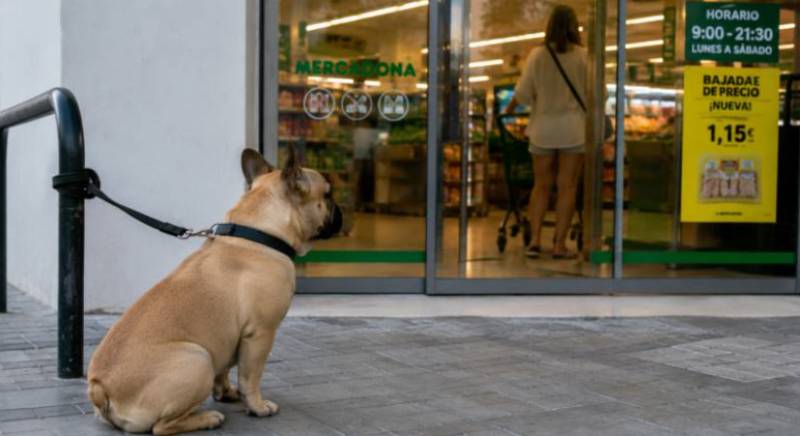
Experts say organised
criminal gangs are increasingly targeting dogs that can be sold quickly for thousands of euros, used for illegal breeding or exploited for other criminal activities. French Bulldogs top the list thanks to their popularity and eye-watering resale prices, but Chihuahuas, Dachshunds, German Shepherds, Belgian Malinois and Staffordshire Bull Terriers are also among the breeds thieves are said to favour.
Summer can make things even easier for opportunists. We're all spending more time outdoors, stopping for a coffee, heading to the beach or popping into the supermarket, and it only takes a moment for a dog left unattended to disappear.
That's one of the reasons Spain's Animal Welfare Law now bans owners from leaving dogs tied up outside shops and other businesses. Experts also recommend keeping your pet's microchip details up to date, avoiding sharing your dog's location on social media and, if possible, using a GPS tracker. Hopefully it's advice you'll never need, but it's worth bearing in mind.
And finally, something to end the week with a smile.
If you've ever fancied packing everything in and escaping to the Spanish countryside, one estate agent has come up with the ultimate opportunity. Instead of buying a country cottage,
why not buy your very own village?
A tiny hamlet in Galicia has gone on the market for €850,000 and it comes with far more than a front door and a set of keys. The sale includes 11 houses, a chapel, a traditional village shop, a former medical dispensary, two warehouses and around 40,000 square metres of land.
Three of the homes are ready to move into, while the rest could do with a little TLC. Altogether there are more than 40 bedrooms, over 20 bathrooms and enough space to turn the village into almost anything you can imagine.
The estate agent behind the sale suggests it could become a rural tourism resort, a wellness retreat or even a co-housing community. Or you could simply enjoy telling people you own an entire Spanish village. It's not a sentence many of us get to say.
Alicante
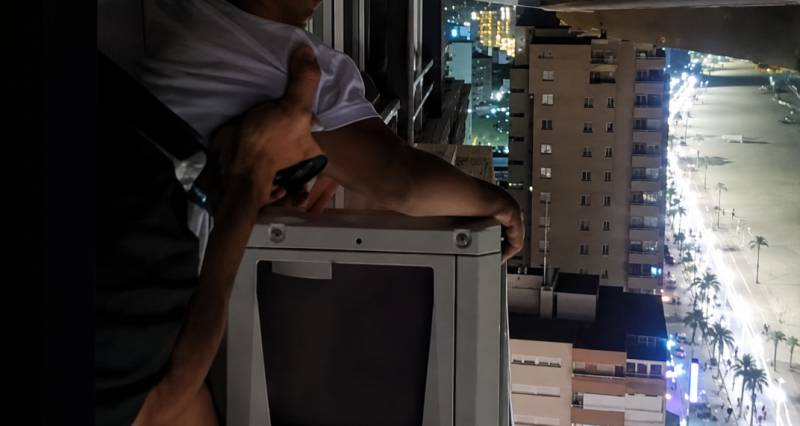
The alarm was raised late on Saturday night when a neighbour spotted the youngster sitting outside the apartment block on Avenida Bilbao and called the building's caretaker. Officers rushed to the scene but couldn't reach the child from inside the flat, so they climbed onto the neighbouring balcony instead.
What they found was every parent's nightmare.
One officer managed to grab the child by the arm before he could fall, while a colleague held tightly onto him to stop them both going over the edge. Before firefighters even had the chance to arrive, the building's caretaker found a spare key, allowing officers to get inside the apartment and bring the boy to safety.
Documents inside the flat helped police identify the child's father, who was arrested when he returned. According to officers, he told them his son, who has autism spectrum disorder, had been left alone while he went out on errands. The incident has now been passed to the courts.
Emergency crews were called to the scene on Monday afternoon, where firefighters and paramedics treated the youngster before taking them to Torrevieja Hospital with multiple injuries.
Thankfully, nobody was trapped inside the buggy and the child's injuries are not believed to be life-threatening. The cause of the crash is still being investigated.
As emergency crews were dealing with accidents elsewhere in the province, firefighters in Torrevieja were also facing an anxious evening of their own.
Residents of La Siesta and El Chaparral were left fearing the worst after a vegetation fire broke out alarmingly close to their homes on Wednesday night.
Fire crews from Torrevieja and Almoradí, supported by forest firefighting teams and Local Police, quickly brought the situation under control before the flames reached any homes or spread through the protected natural park.
The fire was extinguished within a couple of hours, although firefighters remained at the scene overnight to damp down hotspots and make sure it couldn't flare up again. The cause of the blaze is still under investigation.

Thankfully, not every unusual story in Alicante this week involved flashing blue lights.
Remember
the mystery caiman spotted wandering along the Vinalopó riverbed in Sax a couple of weeks ago? Well, despite an extensive search involving local police, Seprona officers and wildlife specialists, the little reptile has still not been found.
At first, authorities urged anyone walking near the river to keep their distance and report any sightings immediately. Now, though,
experts believe there's a sad possibility. They think the animal may simply have starved to death.
The young caiman, believed to have been dumped after being kept illegally as an exotic pet, would have struggled to find enough food to survive in the wild. While officers haven't completely given up hope of finding it alive, the longer the search goes on, the less likely that outcome becomes.
It's perhaps not quite the ending people expected when photos of the tiny crocodilian first started doing the rounds online, but it's also an important reminder that wild animals rarely thrive once they're abandoned in places they were never meant to call home.
Andalucía

The blaze broke out at a block of flats in the Arroyo de la Miel area shortly before 5.40am, quickly spreading from one apartment to several neighbouring homes and forcing residents to flee.
Firefighters from Benalmádena, Mijas and Fuengirola rushed to the scene alongside police officers and medical teams. Several people were rescued from the building, but despite their efforts the two youngsters sadly couldn't be saved. Their mother was pulled from the apartment alive and remains in hospital in a serious condition.
The rescue operation also took its toll on the emergency services. One firefighter was injured tackling the blaze and several firefighters and police officers were treated for smoke inhalation after helping evacuate residents.
Benalmádena Town Hall described the incident as a tragedy that has left the whole community in mourning, while Mayor Juan Antonio Lara paid tribute to the emergency crews who risked their own lives trying to save others. An investigation is now under way to determine how the fire started.
Away from the heartbreaking news, fresh figures this week have underlined something many of us already suspected. More and more people are choosing to call Málaga home.
It's easy to see why. Between the Costa del Sol lifestyle, excellent transport links, a thriving jobs market and more than 300 days of sunshine a year, Málaga continues to attract newcomers from every corner of Spain and well beyond.
The province is now Spain's sixth most populated and, if current trends continue, it's expected to overtake neighbouring Seville sometime around 2037. It also accounts for around one in every three new residents added across Andalucía over the last quarter of a century, proving the region's popularity shows no sign of slowing down.
And finally, if you're around Almería this weekend and fancy getting out of the house once the sun goes down, there's plenty happening.
On Sunday, the action moves up to Mojácar Pueblo, where
Active Circus will bring comedy, acrobatics and plenty of laughs to Plaza Nueva in a free family-friendly show that's suitable for all ages.
And if your idea of a perfect summer evening involves a little shopping, good food and live music, don't forget
Macenas Blue Nights continues every Thursday throughout August. The relaxed open-air event combines artisan market stalls, local food and wine, live entertainment and workshops, making it well worth adding to your summer calendar if you haven't visited already.

That’s all for this week. Thank you for reading and we’ll see you again for more next Friday.
’Til then!









 Spanish News Today
 Alicante Today
 Andalucia Today